
Orthodontic Treatment
Orthodontics is a dentistry specialty that addresses the diagnosis, prevention, management, and correction of mal-positioned teeth and jaws, as well as misaligned bite patterns. It may also address the modification of facial growth, known as dentofacial orthopedics.
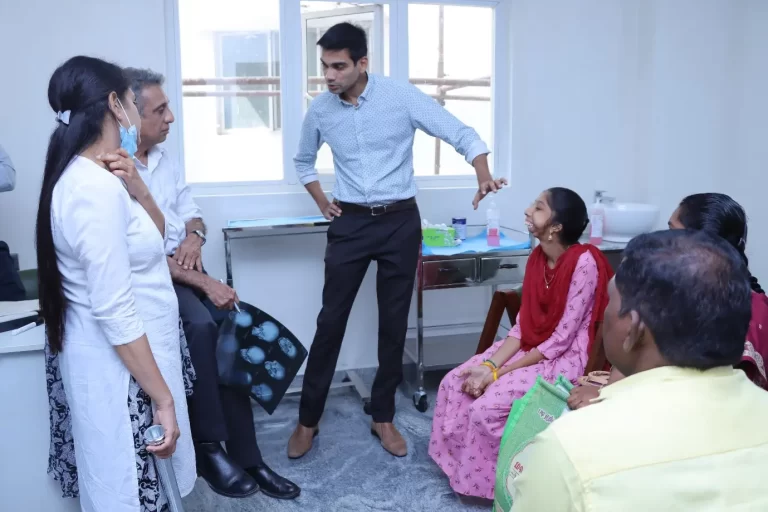
Scope of Services :
- Nasoalveolar moulding (NAM)
- Pre ABG Preparation (Expansion, Fixed appliance)
- Post ABG Orthodontic treatment (Expansion appliance, fixed braces)
- Anterior maxillary distraction (AMD)
- Preparation for Orthognathic surgery
Working Days and Hours :
Monday to Saturday, 9AM – 4PM
Description:
An orthodontist plays an important role in the treatment of cleft palate, which is a congenital condition where the roof of the mouth does not fully close during development. While the primary treatment of cleft palate involves a multidisciplinary team of healthcare professionals, including surgeons, speech therapists, and dentists, orthodontists specifically focus on the alignment and positioning of the teeth and jaws
Here are some specific roles of an orthodontist in the treatment of cleft palate:
1. Pre-surgical orthodontics: Before the surgical repair of the cleft palate, orthodontic treatment may be necessary to align the teeth, close any gaps, and create the best possible conditions for the surgical procedure. This may involve using braces or other orthodontic appliances to move and position the teeth. 2. Post-surgical orthodontics: After the surgical repair of the cleft palate, orthodontic treatment continues to ensure proper alignment and positioning of the teeth and jaws. The orthodontist may use braces, retainers, or other appliances to guide the growth and development of the dental arches, close any remaining gaps, and achieve optimal occlusion (bite). 3.Jaw alignment: Cleft palate can affect the growth and alignment of the upper and lower jaws. An orthodontist can assess and address these skeletal discrepancies, helping to achieve proper jaw alignment and facial aesthetics. This may involve techniques such as orthognathic surgery, functional appliances, or orthopedic devices. 4. Coordination with the multidisciplinary team: Orthodontists work closely with other healthcare professionals involved in the cleft palate treatment, such as oral and maxillofacial surgeons, speech therapists, and prosthodontists. They collaborate to develop a comprehensive treatment plan, ensuring that the orthodontic interventions align with the overall goals of functional and aesthetic rehabilitation. 5. Long-term follow-up care: Orthodontic treatment for cleft palate is typically a long-term process, and regular follow-up appointments are necessary to monitor the progress, make adjustments, and ensure stability and proper occlusion over time. Orthodontists provide ongoing care to address any changes or issues that may arise during the treatment process. It’s important to note that the specific role of an orthodontist in the treatment of cleft palate may vary depending on the severity of the condition and the individual needs of the patient. Collaborative care among various specialists is crucial to achieving the best outcomes for individuals with cleft palate.
Phases of ortho treatment:
Orthodontic treatment in cleft lip and palate patients is a complex and multi-phase process. The overall goal of orthodontic treatment in these cases is to establish a stable, functional, and aesthetically pleasing dental and skeletal relationship. The treatment is typically divided into several phases, which I will outline below:
Mixed Dentition Phase:
During this phase, which usually begins around the age of 8 to 10, the orthodontist focuses on addressing any dental malocclusions or discrepancies present in the primary and early permanent teeth. The primary objectives include aligning the arches, correcting crossbites, creating space for permanent teeth eruption, and guiding the growth and development of the jaws.
Pre-Alveolar Bone Grafting Phase:
In individuals with a cleft involving the alveolar ridge (the bony part that supports the teeth), a pre-alveolar bone grafting procedure is often performed around the age of 8 to 11, prior to the eruption of the canine teeth. This surgical procedure involves placing bone grafts to close the gap in the alveolar ridge and facilitate the eruption of the permanent canine teeth.
Permanent Dentition Phase:
Once the permanent dentition has erupted, usually around the age of 12 to 14, the orthodontic treatment enters the phase aimed at achieving proper alignment, occlusion, and coordination of the teeth. This may involve the use of braces or other orthodontic appliances to correct any remaining malocclusions, such as crowding, spacing, or misalignment of the teeth.
Preparation for Orthognathic Surgeries:
In some cases, individuals with cleft lip and palate may require orthognathic surgery to correct significant skeletal discrepancies and improve facial balance and harmony. Orthognathic surgery involves repositioning the jaws to achieve proper alignment and function. Prior to the surgery, orthodontic treatment plays a crucial role in aligning the dental arches and coordinating the bite. The orthodontist and oral surgeon work closely together to plan the surgical treatment. It’s important to note that the duration and specific procedures involved in orthodontic treatment for cleft lip and palate patients may vary depending on the individual case and the severity of the cleft. Treatment plans are usually customized to address each patient’s unique needs and may require a collaborative approach involving orthodontists, oral surgeons, speech therapists, and other healthcare professionals.